Oct 17, 2011

The N-Dimensional Real World

A brief theory about what is the opposite of a stupid assertion.


I was discussing with my mother about intelligence, geniality and stupidity when I asked my mother about what was the opposite assertion of a stupid assertion. My mother (85 yo) answered to me: "It is obvious: it is an intelligent assertion!". I was so sorry, but I had to confute this assertion as a naive assertion - I could not obviously say: "it is a stupid assertion" to my mother! When we discuss about philosophical matter I have great respect for her! -. I said her that we are never sure that the OPPOSITE OF A STUPID ASSERTION is not another stupid assertion. The opposite of a stupid assertion can be another stupid assertion! And that is not so trivial!

WE ARE LIVING IN THE REALITY!
Indeed we are living in the Reality and our discussion was thought into that.
The Reality, when it is analyzed, has a particularity: it has a so huge number of facets that we cannot take into account of everything discussing of it.
Better: Reality has a multidimensional model and every time we argue on Reality, we are able to take into account of a limited amount of variables.


MANICHEISM
When colloquially we - my mother and me - were using the term "the opposite" I was deliberately permitting us to use a typical approach like that in disputes are currently set in Italy: "is it either fault to Corporation or to Trade-Unions?" or maybe "Is it either fault to Government or to General Economical situation?".
Typical Italian approach is to set the two things onto two opposite ends of a line just to split Good Guys Vs Bad Guys; so, apparently, Co and Trade-Unions, Government and General Economical situation appear to be on the same line as opponents: we, Italians, are all Manicheans, we love to put ourselves amongst good guys. So we absolutely need Bad Guys somewhere in front of us!
Avoiding and refusing for a while my breed's instincts, I guess that the correct approach to it, is to place the two concepts on independent dimensions instead, having, this way, two independent responsibilities impacting the Reality. This way we avoid a pretended opposition of good and bad guys that belongs to policy and not to a serious approach to the Reality.
Indeed, when we speak about Reality every person has his own approach: which one is the best one? I guess that higher is the number of variables we are able to gather about the problem and more the model is precise (or less erratic/random is its behavior).


QUANTUM THEORY OR ZENO'S PARADOX?
Collecting all those variables is not a simple task. We can find them in a small amount if we simply are focusing on the problem (without disturbing New-Age theories about Quantum physics on "everything is resonating" which is a charming though impossible to use theory).
Yet, when we assume as a base of our theories a limited number of variables, we are normally able to easily cope with them.

We can artificialy and suitably reduce the number of, so we can demonstrate almost everything (Zeno's Paradox of "Achilles and tortoise" is one of the most famous), but our goal here should be a better perception of the Reality and its rules, to have a better forecasts.


INVESTIGATING PERTURBATIONS IS STILL THE BEST WAY?
To gather more variables we have to investigate on anything is a perturbation of the standard process carried on with the known variables: the way was used in Quantum theory. Differences between expected behavior and resulting behavior give us evidence of unknown perturbing variables. In this way we can maybe find new informations but we spoil a lot of time and efforts also.
An help can come from perception of different persons working together (brainstorming is one of the most famous activities to gather variables): that yields a better harvest. Every person, indeed, focuses on his own particular facets of a problem and more person cover a wider range of facets.
But the tricky thing (or think?) is to find them in a more effective or maybe predictable way.

EMPIRISM or PREDICTABLE FINDINGS?
A problem can be considered complete when the distance between expected and resulting variables narrows sufficiently. There is no guarantee that a sufficient number of persons find the necessary amount of variables when they act in a freewheeling way. There are other means to discover them in a more predictable way: using different exploring ways for Problems, Mind and Thinking: a true methodic wandering in the problem.

Ask me for it

Jun 4, 2011

Escherichia Colii plague

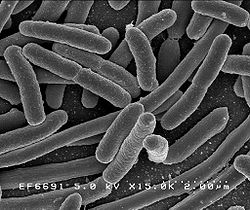
This is an hypothesis about the main reason why the Escherichia Colii (E.C.), presently infecting Germany, has so strong effect and how to reduce the immediate risk for it to be so lethal.
Anche in Italiano
Infection
It's going to be transformed into a true psychosis: I speak about Escherichia Colii disease that is apparently spreading in North and Central Europe.

There are many cases in Germany and some around the north of Europe.

That disease spreading has a strange behavior: I guess that Germans clean sufficiently well their vegetables before they consume them (they did it for sure before the last happenings about E.C. as well) to normally have no risk from bacteria of any kind to reach an amount to become critical and dangerous for human health. Normally the risk for enteritis to be so lethal is water contamination and consequent ingestion of a huge amount of bacteria. Here it seems this is not the case: not an eavy contamination in term of ingested bacteria at once.

The disease spread

Yet the disease seems to spread around and seems to flood off.

E. Colii. is not a contaminant with a carrier person-to-person, like it was in the past plague, nor brought from birds or introduced with contaminating meat neither. It must be ingested and it must reach a remarkable amount before it becomes dangerous.

It is simply declared brought by vegetables: it means that only few, or seemingly single, bacteria are contaminating vegetables then infecting hosts, eating contaminated vegetables.

So there are few important factor were not taken enough in care of during present times: 
  1. Any disease comes from an agent, in this case bacteria (this is accoounted!)
  2. Every infection in present case comes from a  clean carrier, like vegetables (for sure they were washed enough by their users);
  3. they cannot be so contaminated to consider them as the main reason of infection in term of mass, critical for that infection to be dangerous.
  4. Strong extemporaneous (not resident) infections are normally very weak microorganisms that can survive only in particular environments, well selected and well protected, like particular Ph or in total lack of any competitor.
  5. Evolution never foster lethal microorganisms like the presently considered: it has to struggle for surviving.
  6. infections can be lethal if they can develop into a favorable environment  inside the host and for a sufficient time.
  7. The spare cases seam to be more related to a weakness of the host organism than to a true pandemic risk, like it was in the past for plagues or in the recent years for bird flue.

So those aspects signalize that the reason why that particular microorganism can produce so lethal result seams to be the chance for it to develop undisturbed and invade the intestine without competitors inside the host organism.
Natural Ceases


When I worked in dairy industry I've spoken some times about the presence of E.C. in ceases and capacity for  biologic flora of natural ceases to coerce it (avoid development of E. C. up to a critical point, critical for host organism). Some particular natural ceases have this kind of well balanced natural flora, capable of coercing and thus limiting E. C. and other dangerous microorganisms to an amount that is far from being critical.

Today, many persons for wellness purpose or thinking to improve their health tend to assume single or mixed specialized intestinal flora.
Does this habit be a risk with a presence of dangerous microorganisms?

They are not and they have no natural competitors to E. Colii and they maybe permit a strong vulnerability when a completely unexpected microorganism appears in the environment.

Conclusion
I remind that when I traveled in foreign countries the first times I moved outside Italy in my life: I suffered for intestinal troubles for some days then, travel after travel after travel, they were reduced  to a zero reaction. After that, I feed myself with raw sea foods bought in small food stores on the road or on the shores in China and Thailand without problems: my flora got long experience of surviving.

This last example support my doubt: I strongly believe that it is important to assume natural flora like the one you can find in cured natural ceases like Italian Taleggio, Gorgonzola or French Roquefort or Roblochon, or other ceases you can find in Spain, Greece, Germany and all over the world too.

Intestinal Flora is a System with its own equilibrium, not a single bacterium factory: better to keep it well balanced, instead of asking it particular performance!

I suggest: just natural/traditional ceases till that danger finishes!

Nov 21, 2010

The failure of geniality

(a paradoxal theory about the impossibility for the geniality to be useful)


APPARENTLY there are no chances for the geniality to be recognized. Then in any kind of environment and in sensitive ones also, only standard solutions are taken.
APPARENTLY no way to understand geniality before decades: a lot of wasted time and opportunities!


The ancient history and the most recent too is full of great and genial ideas: from Edison’s bulbs to Relativity, again to the Babbage calculator and so on.
At least one Genius is working somewhere now!

Genial Ideas: an endangered specie
In any size of corporation, a lot of money is spent for nothing and in many cases the R&D department just touches many Eldorado to quit them at once or, in the best cases, it produces standard solutions with just a hint of geniality.
Indeed, if you go to see the history of many corporations, you can normally see innovative ideas as the starting point. Then they prefer to buy revolutionary novelties around than developing their own, limiting their innovative actions just to improve older ones.
Corporation are full of intelligent peoples that have to cope with money and roles assignment, with distribution of management and so on, yet you can perceive as strange the fact that revolutionary technologies have ever been developed inside those kind of hobbles and finally asking yourself how could Co's survive for long and producing high-tech: they all have complex systems to budget new programs and development.
Again, why that happens? Because the structure of big corporations, for organizational purposes, fills up with peoples that belong to positions that are high in the scale of Geniality but afar from vertex. Having roles where they decide for others to be accredited or not for budgets and money to be used they have to be prudent and cautious.

Genius environment
Now we move away from budgets and we try to guess how a genius’s environment is structured and works. We can imagine that everywhere a Super Genius is, he shares his life with other peoples. Normally with geniuses or very intelligent persons. So every Super Genius normally shares his live with four or five Geniuses and many more very intelligent persons.
Every time a Super Genius shares his knowledge and achievements with others Geniuses, he has to discuss his theory with them. If anything in his theory is achievable just to Super Geniuses, std Geniuses cannot get the right point. So they start a criticizing process against the Super Genial Idea by the cause of their limited understanding. The super genius, having great opinion of his colleagues and having no way to determine either if he is right or they are, accepts the criticism and Super Genial Idea is quit (and the world for at least 10 years will fail this step ahead in the knowledge/technology).


The same happens again between Geniuses and Super Intelligent Persons: every Genius shares his knowledge with four or five super intelligent persons and again the problem arises: no way to determine who is right then genial ideas (which could make the world a jump only one year ahead!) are lost. Genial ideas are many more than Super Genial Ideas, we guess at least four or five times, easier to produce and finally with higher economical impact and big incomes!


The Pyramid 
We repeat the same process again and again down the scale of Geniality: we can represent it as a Pyramid, whose vertex has a Super Genius and lower layers have peoples occupying lower and lower positions in this scale.
Damned by our instinct to the democracy, we tend to have impelling the need for comparison with others and for the assessment of our ideas in public arenas. If the time is too early, long before we figure out the whole sketch, the most of the times the project aborts as the sole effect.

So, the sad news is: for geniality, there is no way to produce great effects in the real life!
The fault is not to the Geniuses or skilled persons, but to the organizations that are not able to understand which one is the best idea and who has the control over the Genial project: who is the best amongst the group they have devoted to solve problems and who is less. Voila because solutions are normally a mix of std solutions with just a hint of geniality!


How to adopt and develop genial Ideas? If we go back in the history we can observe that super genial ideas like Einstein's or Turing's or others, where achieved in a strong solitude and in some sort of detachedness. Yet that form of loneliness was an independent choice; better: in many cases was a kind of suicide, a fight against the whole world.


What in standard life?

If a genial idea happens into a company, the needed solitude is impossible and recognition of geniality neither. What about new genial theories or products? Unfortunately there is APPARENTLY no measuring mean to help decisions to be taken when the field where organizational peoples have to operate and decide is out of their reach. So although they can choose in a proper and polite way, this seldom is the best way, i.e. the genial solution a company needs: they commit their decisions to a democratic system: the majority in the staff makes the project version good enough. This way every risk is avoided and, in the same time, never the most intriguing solution is taken.
Exceptions to such a general rule? Yes! Companies ruled by a Visionary Geniuses!
How to protect and exploit genial ideas in braking systems where no visionary leaders are at hand?


Is Frustration the only one option?
I can definitely affirm that, in a specific field, there is APPARENTLY no way to determine if there is a Genius at work amongst the many persons belonging to the team. This way big corporation have troubles to recognize and get the best idea, reward and preserve the deserving member of the team, produce the best, getting a lot of money: failure to protect and exploit Geniality is a big damage and frustration!

Yet, there is a way to measure the Geniality in project alternatives and an efficient mean to decide what idea can be considered viable and the best available for the production to be taken.

Yes, I affirm that the previous “there is no way” is just APPARENTLY right, because there is a way to determine what can be considered a true Genial Idea born from a real genial person or team..


The way is to mesure…
(ask me!)


A Step back in the recent past
This new theory calls back to someone's mind, the L. Peter's theory about Bureaucracy. In one way they agree: the system hangs again in the same well structured manner!

Oct 28, 2010

Can a HR manager limit his/her job to just enforcing company rules in recruitment?

(This post is a continuation of a previous)

I suggest managers to consider that is not honest to filter workers based on employment state, those days this one is a feature not always belonging to the person!


Then are we sure that all we have to do is just to apply rules that somebody else has done in other moments and other economical periods?

Are we sure that our skills are just to look that the candidate's features fit into our rules?

Isn't that a realy flat job for a specialist in HR (H means Human!!!).

Are we sure that we are able to understand Humans and to take into account the other side of the problem, their side?

How can a person that had troubles help my company to improve reactivity, adaptation and other skills that in my company are maybe low?


Sorry but I firmly believe that academic discussions help you to continue your job day after day and to preserve you from discussing within yourself about what you do and what you think!

Rules preserve peoples from using their mind.

You cannot go against rules in your company? You can try to change rules or better to improve rules fitting into rules new situations not belonging to the past!


If your company doesn't fit the present and the future in their rules, your company can be the next to produce unemployed peoples. What about you then?


Think back a way to fit all those: Honesty - never forgetting that the first level value for a mother is to feed her kids and, I guess, your first level too! - unemployed peoples, your company wealth, ethics of your company toward society before your company requires it from society (never forget: before you give, then you receive!), your boss, your skills, your mediation skills and your inner world that you have never to give away or up!


Be the best advisor for your company from inside too!

Rules permit you not to be engaged too much in your job. Does engagement be a value in your company and a "must" for peoples your company hires?

Oct 27, 2010

Can unemployed worker lie just about his/her unemployed state to get a job?

The question
I have read a lot of comment blaming the behavior of a women unemployed for six months with three kids, having good references from previous managers, who, to compete in the struggle for a job, lied about her unemployment state; being currently employed was a requirement from the new employer and many HR manager participating in the blog were offended by the behavior of this lady so I decided to explain my opinion, that is:


My opinion
I guess that, as many of you work as HRs in the same country and need to maintain your reputation as much conventional as possible, none of you dare to affirm that being in the opposite side of the question - i mean having three kids to feed and being unemployed - you would lie for sure being unemployed. The problem is not about lies. The problem of this long question is that you need to present yourself as incorruptible man/woman.

I suggest you to go read once again Oliver Twist or other novels from XIX century that your heart has maybe forgotten.

Initiative is a Crime
More: what is initiative here (if you have sales man in your company I guess that they maybe lie to enter into a prospected company and you will never think to set out them from your company by the cause of that!) is miss portrayed with the lie of pretended honesty. Working is a right and, in those days, filtering peoples depending on employment status is a Crime Vs Human beings. Some of you are judging peoples that belongs to another planet. How afar is that discrimination from those in the past, when black peoples were judged not worth of being considered human beings? The step is not so afar in between!

I blame all amongst you that put the question afar from the right to get a job into the blame for lying!

Then, how many companies lie about their position in the market, lie about the job, use recruiting for stealing infos from competitors and so on? What about that? who is the worst?

So, do not act as angels, when we are not!

You maybe need more work for checking those unemployed, but your mission is to increase the general heath and wealth also, I guess.

Finally if you do not take any risk in your job what are you worth of? just to rasp tons of papers? I suggest your boss to review your earnings to level down to the risk you are able to take. No risk, no money: that is a market rule to day!

My Seat is comfortable
I would emphasize some more things to those amongst us that pretend to say: "I make what my employer asks me: if he asks me to hire only people who are still employed, I will!".

You say: "I'm a serious HR manager", OK I can accept this!

You are a manager and you have responsibilities toward your employer. That is OK: is your job, they pay you for that.

Your boss asks you to filter new workers just amongst employed peoples. OK you can say yes, that is a natural immediate answer!

If your boss is asking you something that is not correct, I suppose you maybe suggest him a better solution to avoid possible mistakes or damages or higher costs or less efficiency.

If you can save money having better results you have to say to your boss!

If your company will accept unemployed peoples, with good references your company maybe can save good money. You have to tell your company!
If you are here, discussing those topics, you know all those very well!
You know that there are plenty of good peoples unemployed, worth of a salary: skilled peoples, very committed, mostly after a period of unemployment.

Good earnings means responsability
Now, if you still think to deserve a good salary, you have to take into account this new opinion about unemployed peoples and to reshape your boss's opinion too!
If you think to make your best for your company you have to make it you can choose either to obey your boss or to present him a better solution. Yet you have to make the best you can!

If you do not do so, you will fail in one of your most important duties: to act as the best advisor for your employer as you can!

If you know that you can propose him good workers amongst unemployed peoples, you have to tell him and to persuade him he was wrong!
Think about! Ask yourself if you are permitted to carry on you job day after day in a flat manner! Sooner o later someone will replace you!

Try not to be Pontius Pilate!